
Fireplace Installation in Portland, Oregon. Wood, Gas, Electric.
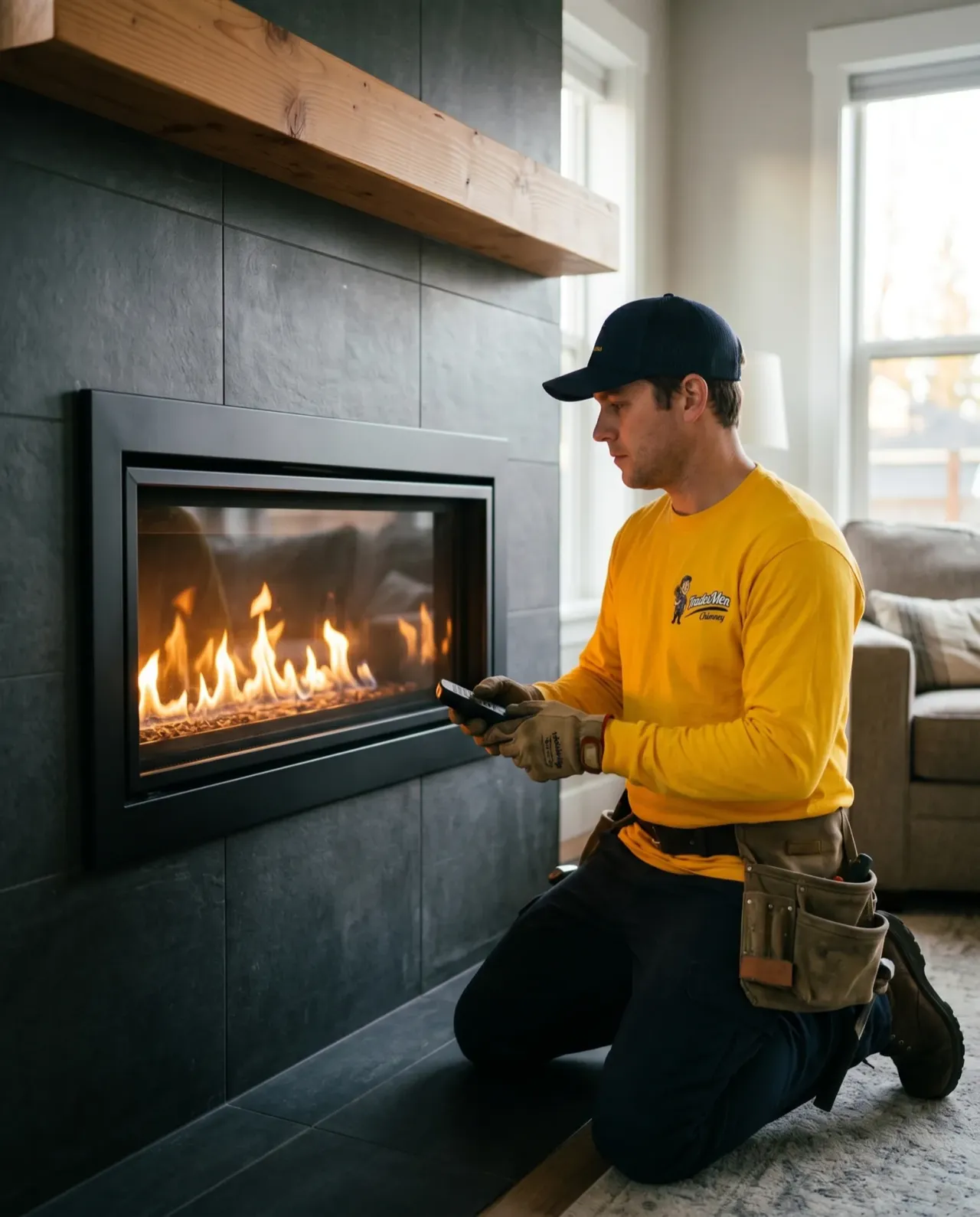
From high-efficiency wood inserts to modern linear gas fireplaces, our NFI-certified installers handle every step. That includes permits, venting, hearth work, and finish. Every install is DEQ-compliant, inspected, and backed by a written warranty.
of fireplace problems start with bad installation.
Industry reports consistently find that the majority of fireplace failures (draft issues, backdrafting, smoke smell, cold rooms, even early liner failure) trace back to improper venting, clearances, or sizing at the time of install. A correctly installed fireplace heats better, lasts longer, and passes inspection the first time.
Source: HPBA & NFI
Wood vs Gas vs Electric: What Will It Actually Cost You?
Tell us how you plan to use your fireplace and we will calculate the 10-year running cost for all three fuel types side-by-side.
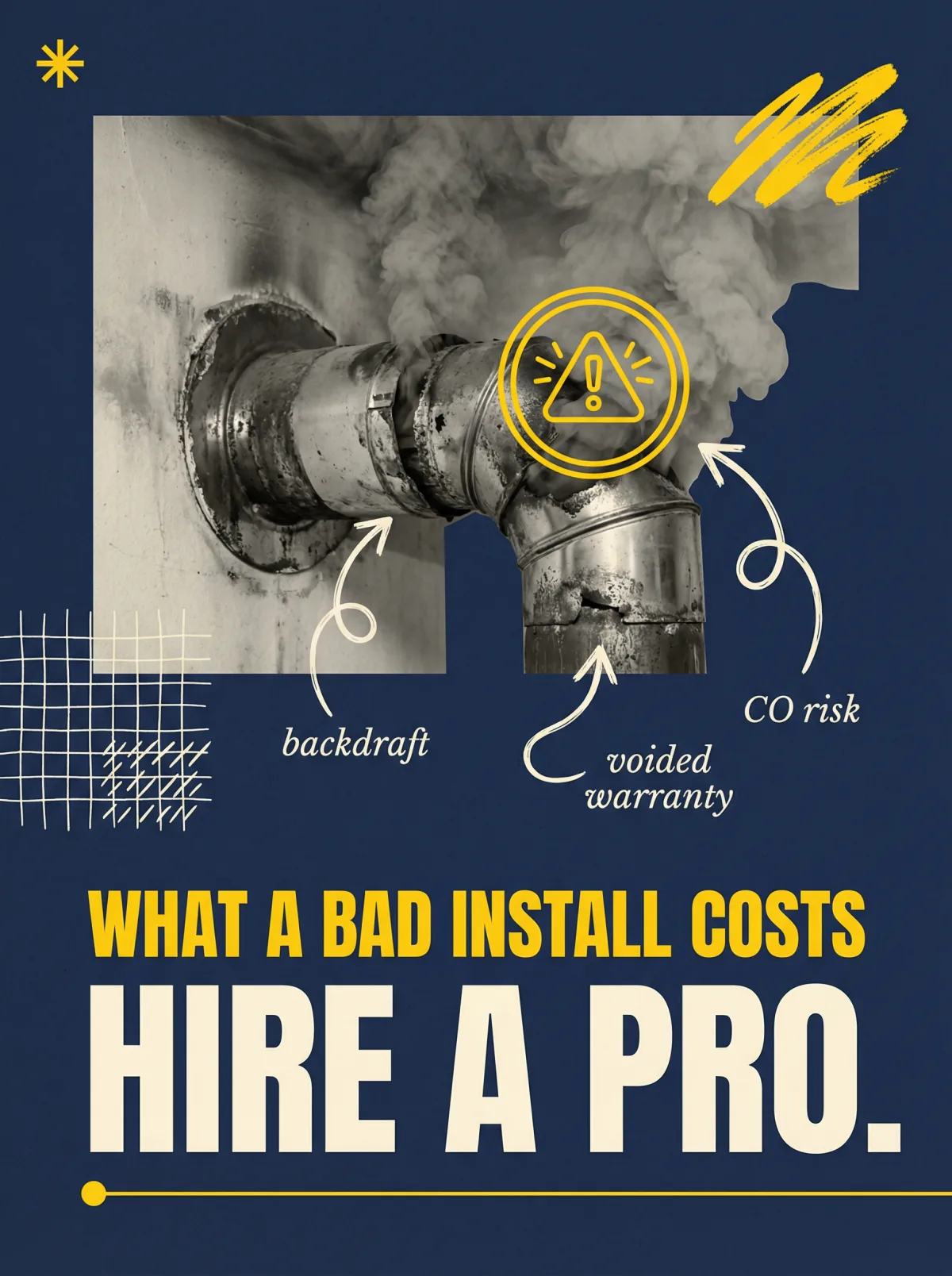
What a Bad Install Actually Costs You
A fireplace is not a weekend DIY. Here's what we see when homeowners or general contractors cut corners on the install.
Backdrafting & Smoke Smell
Improperly sized flues or missed clearances send smoke and combustion gases back into the living room. The fix is usually tearing the venting back out and starting over.
Failed Inspection
Oregon requires a permit and final inspection on almost every fireplace install. Without correct clearances, venting, and fuel connections, the inspector will red-tag the job and you cannot legally operate it.
Voided Manufacturer Warranty
Every major fireplace brand voids the warranty the moment a non-certified installer touches the unit. We install to factory specs so your warranty stays intact.
Carbon Monoxide Risk
Gas and wood fireplaces both produce CO. A bad vent termination or missed clearance turns a safe appliance into a life-safety hazard. Worth doing right the first time.
Cold Room, High Bills
An undersized or poorly placed unit will never heat the room it is supposed to. We size the fireplace to the square footage and the insulation envelope before we quote.
Expensive Rework
Pulling a bad install out of finished drywall, hearth stone, and mantle is brutal. The rework bill is almost always bigger than doing it right the first time.
Wood, Gas, and Electric. All Under One Roof.
We are NFI-certified across all three fuel types. That means whichever direction you choose, the same crew handles it start to finish. No subcontractors, no finger-pointing.
Wood-Burning Fireplaces
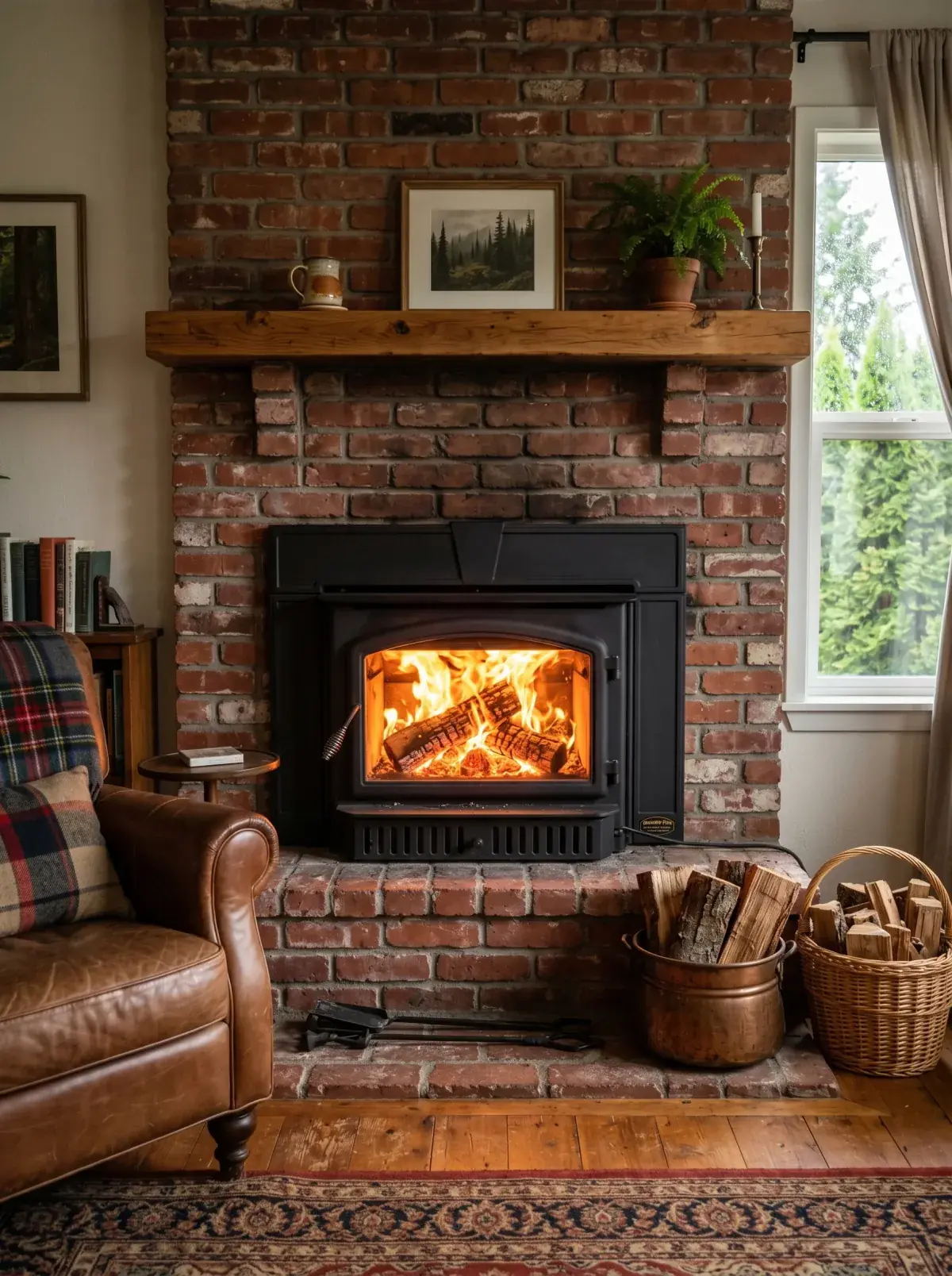
EPA-certified wood-burning fireplaces and inserts from Regency, Pacific Energy, and Lopi. DEQ-compliant for Oregon, clean-burning, and real-flame aesthetic without the inefficiency of an open hearth.
Wood Inserts
Upgrade an existing masonry fireplace into a high-efficiency heater. We measure, install the proper liner, and turn a room-cooler into a whole-house heat source without rebuilding the firebox.
Gas Fireplaces
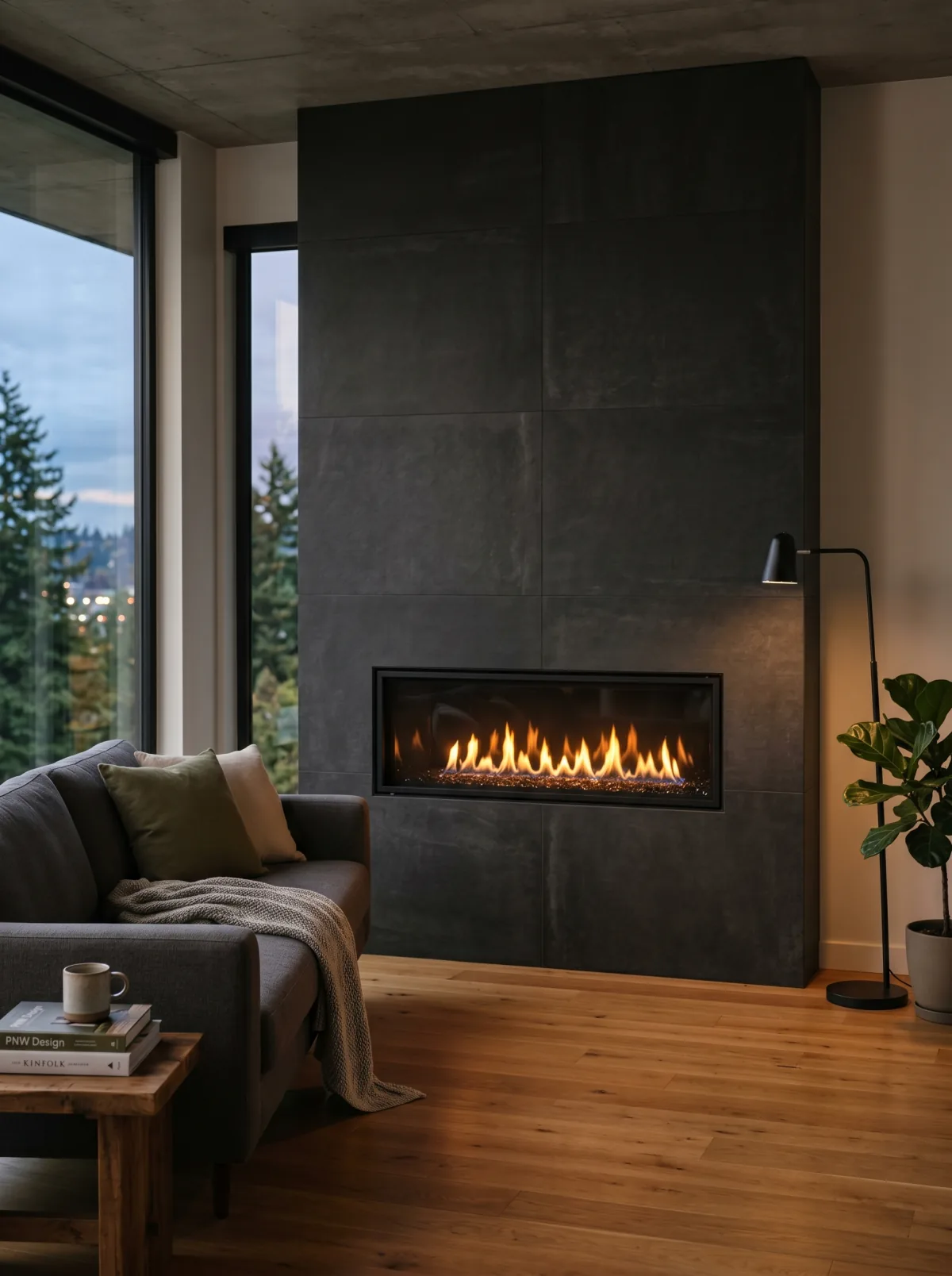
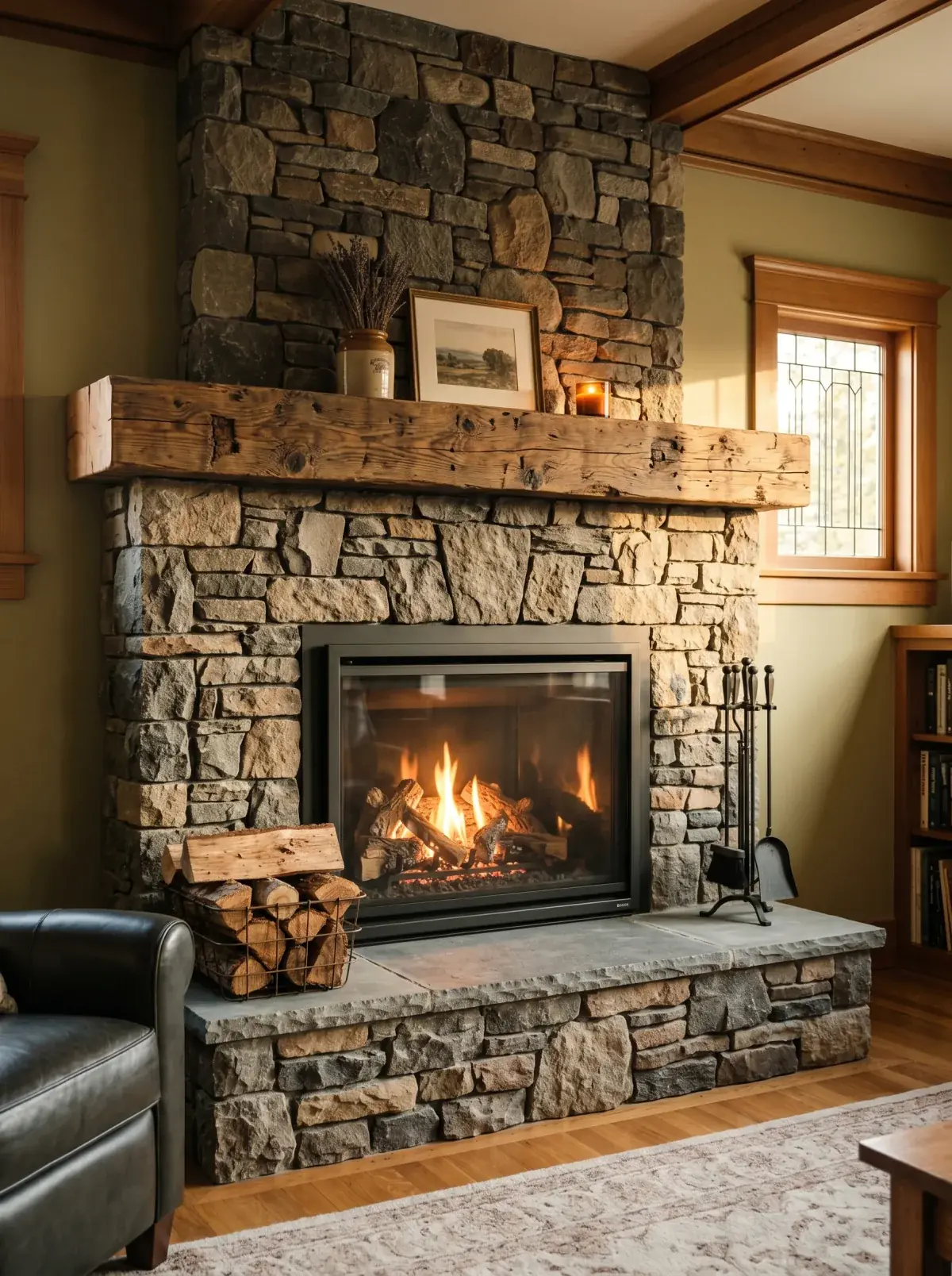
Direct-vent, B-vent, and vent-free gas fireplaces from Valor, Napoleon, and Heat & Glo. Push-button ignition, remote thermostats, and modern linear designs from 30 inches up to 6 feet wide.
Gas Inserts
Convert a drafty wood fireplace into a zero-maintenance gas heater. We pull the old damper, run the liner, set the insert, and hook up the gas, usually in a single day.
Pellet Stoves & Inserts
Automatic-feed pellet appliances are the cleanest-burning solid-fuel option and qualify for most Oregon woodstove change-out rebates. We size, install, and commission.
Electric Fireplaces
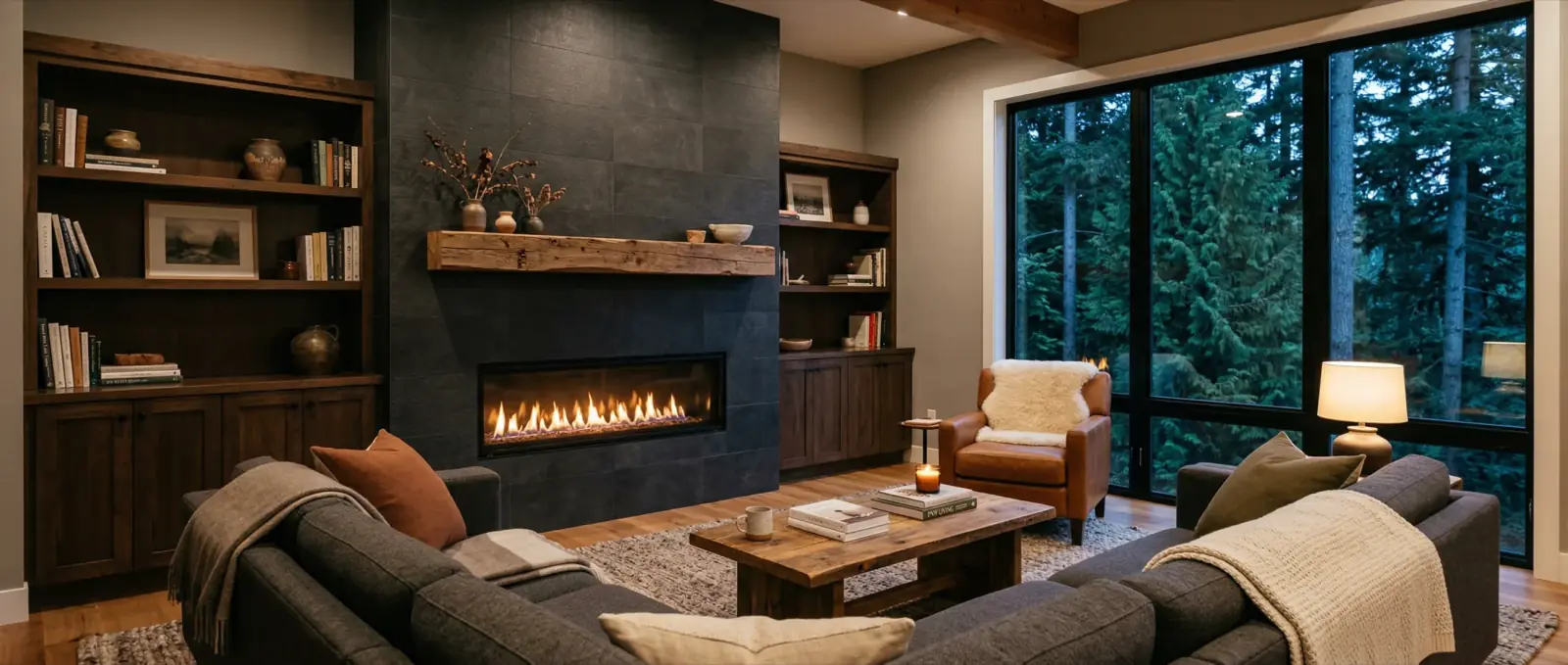
Plug-in or hardwired electric fireplaces for condos, rentals, and homes without gas service. Zero emissions, zero venting, real flame effect, and full heating up to 1,500 watts.
Which Fireplace Is Right for Your Home?
There is no single right answer. The right fireplace depends on your fuel budget, how often you plan to use it, and how you want it to feel. Here is how the three options actually compare.
| Spec | Wood | Gas | Electric |
|---|---|---|---|
| Upfront Cost | $4,500 – $10,000 | $5,500 – $12,000 | $2,200 – $4,000 |
| Running Cost | Lowest (if you cut your own) | Moderate (natural gas) | Highest (kWh rates) |
| Heat Output | 40,000 – 80,000 BTU | 20,000 – 40,000 BTU | 5,000 BTU (1,500 W) |
| Maintenance | Annual sweep required | Annual inspection | Virtually none |
| Venting Required | Full chimney or pipe | Direct-vent or B-vent | None |
| Real Flame | Yes | Yes | LED effect only |
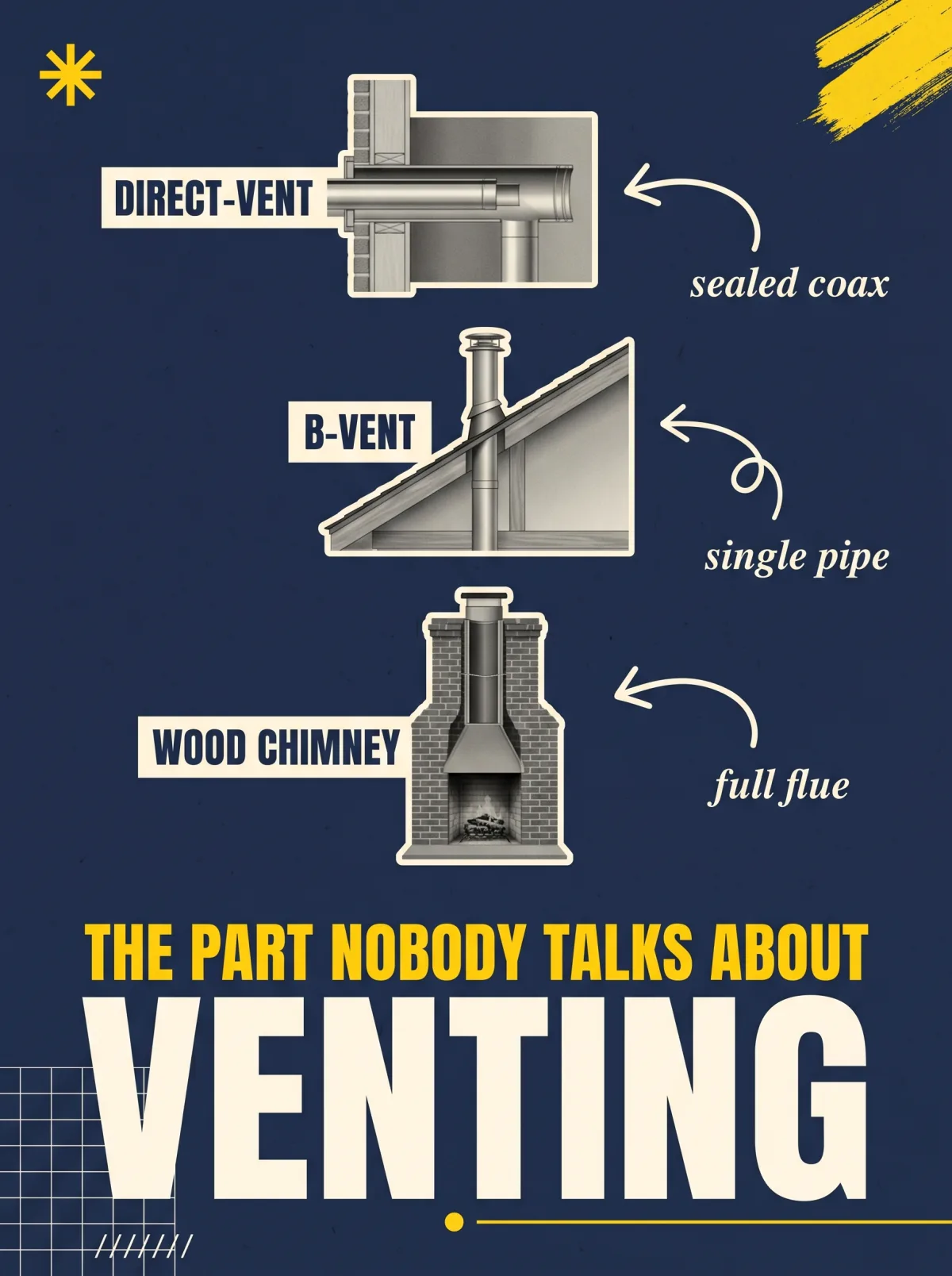
The Part Nobody Talks About
Venting is where most fireplace installs live or die. Pick the wrong system and the fireplace will never draft properly, no matter how expensive it was. Pick the right one and you will barely think about it for 20 years.
Direct-vent gas units use a sealed co-axial pipe that pulls combustion air from outside and pushes exhaust back out, so they can terminate through a wall instead of up through the roof. Traditional B-vent gas and all wood-burning units need a vertical chimney termination above the roofline.
We walk every client through their venting options on the consult so you see the trade-offs before you commit to a location.
Six Steps. Start to Finish.
Every install follows the same process so nothing slips through the cracks, from the first measurement to the final walkthrough.
In-Home Consult
We come out, measure the space, assess the venting options, and walk you through 2–3 fireplaces that actually fit your home and budget.
Design & Quote
Written estimate with model numbers, venting path, hearth and surround options, and a clear all-in price. No surprises at the end.
Permit
We pull the building and mechanical permits with your local jurisdiction. Gas installs also require a gas permit, which we handle.
Rough-In
Framing, venting, gas line, and electrical rough-in, all built to manufacturer clearances and NFPA 211 code. Inspected before close-up.
Install & Finish
Fireplace set, veneer or tile hearth installed, mantle mounted, and the final walls closed up. We leave the space cleaner than we found it.
Final Inspection
A final inspection with the city sign-off, a full commissioning and demo of your new fireplace, and a written warranty handed to you on the spot.
Why Portland Metro Homeowners Trust Our Installs
Anyone can drop a fireplace in a hole. Here is why our installs still draft perfectly a decade later.
NFI-Certified Installers
Every installer holds active National Fireplace Institute certification in the fuel types they work with. Not a handyman who also does fireplaces.
Permit-Pulled & Inspected
We pull the permits, schedule the inspections, and hand you the final sign-off. No gray-market installs that bite you at resale.
One Crew, One Warranty
Framing, venting, gas, electrical, hearth, mantle, and finish are all self-performed. One point of contact, one warranty on the whole install.
Major Brand Dealer
We sell and install Regency, Valor, Napoleon, Pacific Energy, Lopi, and Heat & Glo. If you want a specific model, we almost certainly carry it.
10-Year Workmanship Warranty
Our install work is backed by a written 10-year warranty on top of the manufacturer appliance warranty. We are here, and we are accountable.
Family-Owned Since 2010
15+ years installing fireplaces across the Portland metro. Same phone number, same family, same crew.
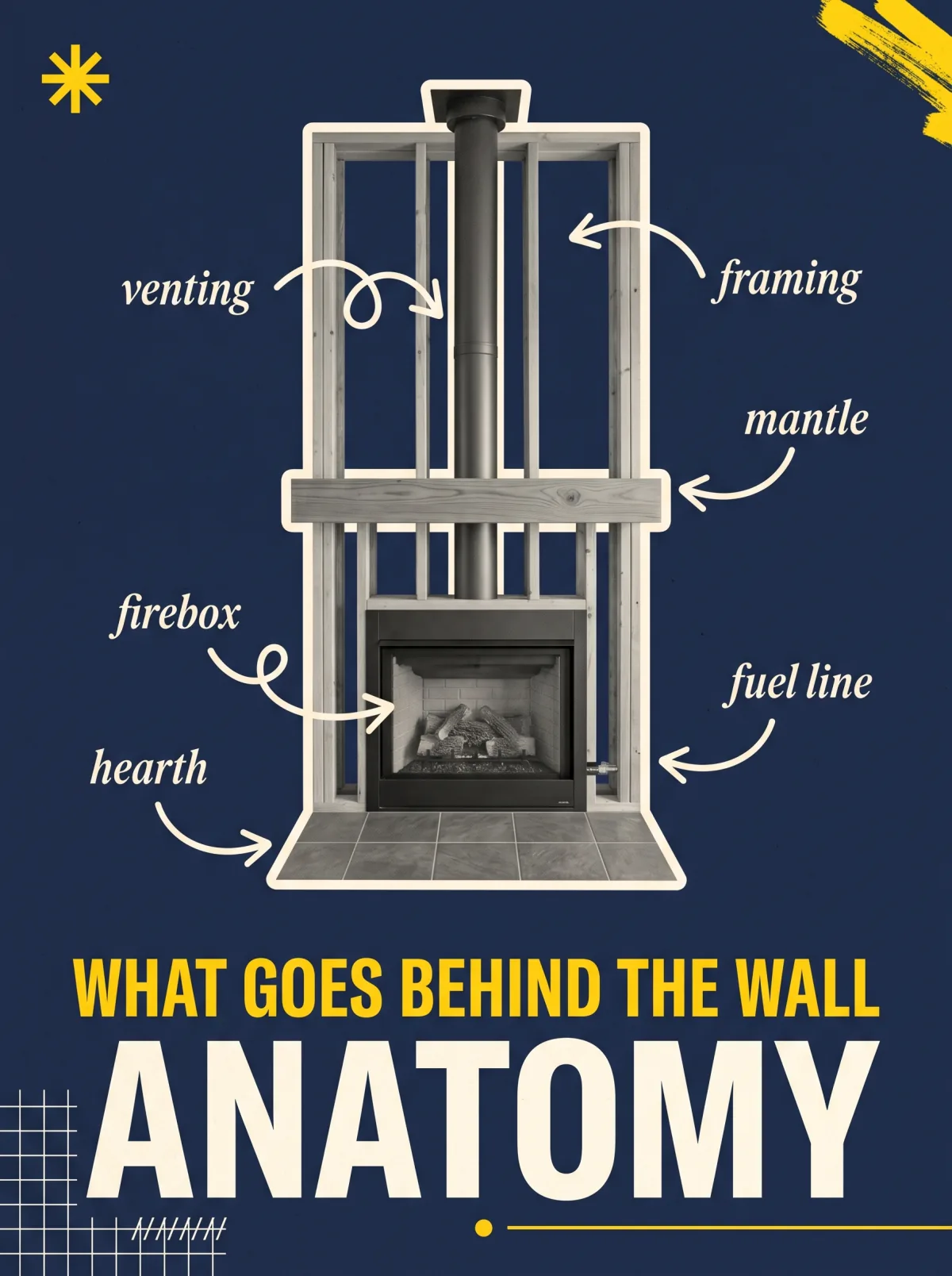
Anatomy of a Modern Fireplace Install
Understanding what goes behind the wall helps you understand the quote. Here is what every correctly built install includes.
- Firebox
- The sealed combustion chamber where the fire burns. Sized and rated by the manufacturer for a specific BTU output.
- Venting System
- Rigid stainless or galvanized pipe, sized per manufacturer spec, terminating at a roof cap or wall cap.
- Framing & Chase
- Fire-rated wood framing around the firebox, respecting clearances to combustibles. Built before the drywall.
- Hearth & Surround
- Non-combustible tile, stone, or brick in front of the firebox, sized to code based on fuel type.
- Mantle
- Decorative shelf above the firebox. Clearance to combustibles is dictated by the fireplace manual, not up to taste.
- Fuel Line or Electrical
- Gas line tied back to the main, or a dedicated 15/20-amp circuit for electric units. Always pulled by a licensed trade.
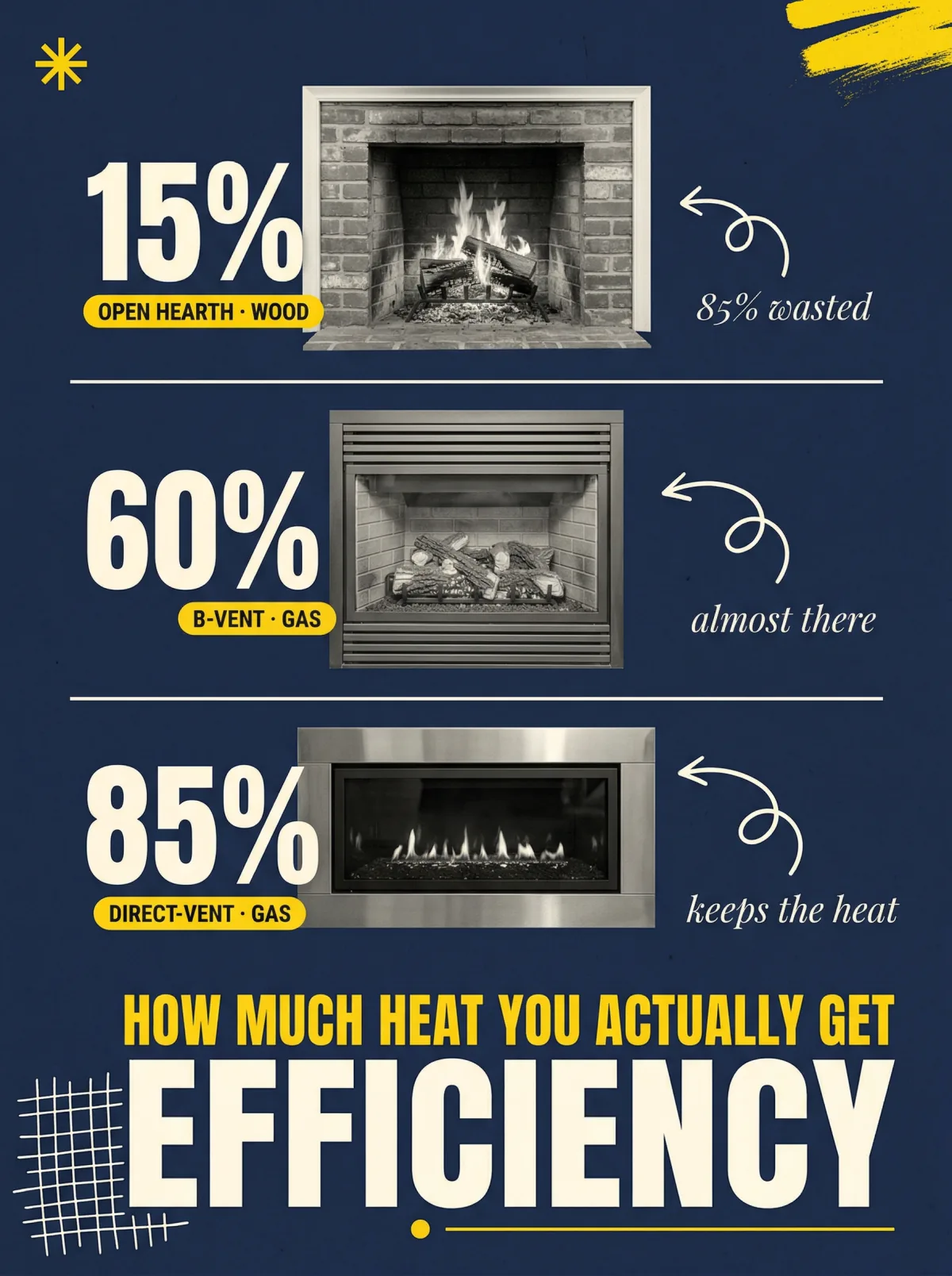
How Much Heat Are You Actually Paying For?
Efficiency numbers matter more than BTU ratings. A 40,000 BTU wood-burning unit at 75% efficiency delivers more usable heat to your room than an 80,000 BTU open fireplace at 15% efficiency.
We steer clients toward EPA-certified wood units (75%+ efficiency) and direct-vent gas units (70-85%+ efficiency). Skip anything labeled "decorative only" if you actually want to heat the space.
- Look for EPA-certified wood units with 75%+ efficiency
- Direct-vent gas fireplaces run 70-85% efficient, much better than B-vent
- Size the BTU to the square footage, not the other way around
- A blower kit moves 30-40% more heat into the room
- Thermostatic remotes cycle the flame to save fuel automatically
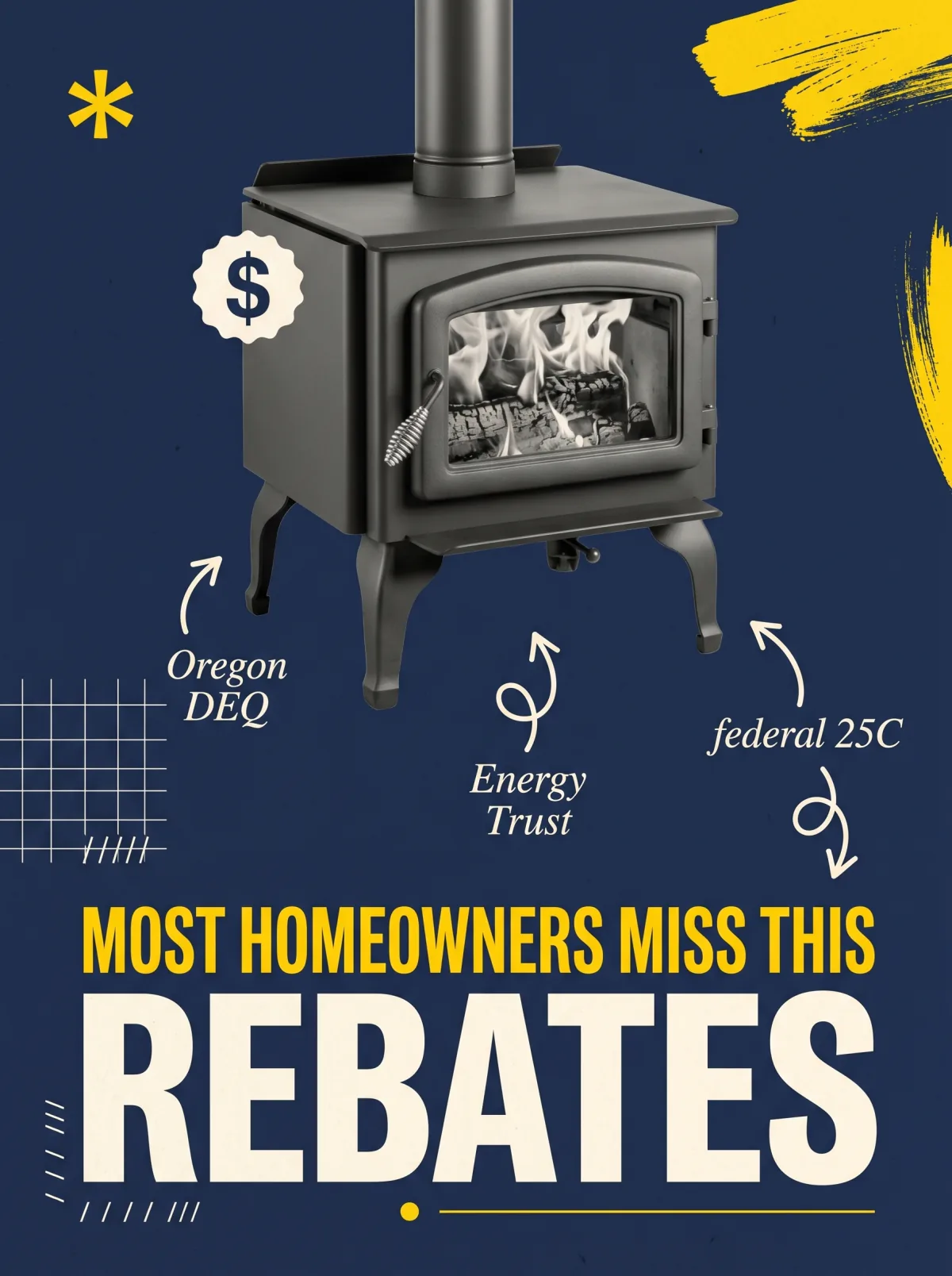
The Money Most Homeowners Miss
Oregon and several Portland metro jurisdictions offer rebates and tax incentives to swap old, inefficient, or uncertified wood stoves for cleaner appliances. Programs change yearly, but at the time of this writing you can often get several hundred to a few thousand dollars back on a qualifying swap.
We stay current on active rebate programs and fill out the paperwork as part of the install. If you qualify, we apply the rebate directly to your invoice.
- Oregon DEQ woodstove change-out rebates for qualifying EPA-certified upgrades
- Energy Trust of Oregon rebates on high-efficiency gas fireplaces
- Federal 25C tax credit on qualifying biomass appliances (check with your tax preparer)
- Local jurisdiction rebates that vary by city and county
What Affects the Price of an Install
Install pricing varies widely based on the unit, the venting run, and the finish. Here is what we look at when we write your quote.
- Fuel type (wood, gas, pellet, or electric)
- Appliance model and brand
- Venting length and whether it is a straight shot or has offsets
- New construction vs retrofit into an existing wall
- Gas line run length (if a new line is required)
- Hearth and surround materials (tile, stone, brick, steel)
- Mantle work and final trim
- Permits and inspection fees
Most complete fireplace installs land between $5,500 and $14,000. Electric units start around $1,200 installed. Every estimate is written and free.
Serving the Greater Portland Metro
We install fireplaces throughout Washington County and the south Portland metro. If your town isn't listed below, give us a call. We probably still cover you.
More From Our Portland Crew
Before most fireplace installs we run a full chimney sweep and inspection in Portland. For older masonry stacks, pair your new install with chimney repair and tuckpointing in Portland, and top everything with a stainless chimney cap built in Oregon. Every install meets Oregon DEQ Heat Smart rules and qualifies for applicable Energy Trust of Oregon and EPA Burn Wise programs.
Questions, Answered.
Don’t see your question here? Our team is happy to talk through your chimney concerns at no charge.
Ask a QuestionHow much does it cost to install a fireplace in the Portland area?
Most complete installs land between $5,500 and $14,000 depending on fuel type, unit cost, venting run, and finish materials. Electric fireplaces start around $1,200 installed. Wood and gas units with tile or stone hearths and a custom mantle typically run $8,000 to $12,000. Every quote is written and free.
How long does a fireplace installation take?
A gas insert retrofit into an existing masonry fireplace typically finishes in a single day. A brand-new wood or gas fireplace with framing, venting, hearth, and mantle usually takes 2 to 5 days of on-site work, not counting the city inspection window.
Do I need a permit to install a fireplace in Oregon?
Yes. Every jurisdiction in the Portland metro requires a building and mechanical permit for a new fireplace install. Gas units also require a separate gas permit. We pull every permit as part of the job and handle the inspection scheduling.
What is the difference between a fireplace and an insert?
A fireplace is a complete new unit installed with fresh framing, venting, and finish. An insert is a sealed appliance dropped into an existing open masonry fireplace, turning it into a high-efficiency heater without tearing out the brick. Inserts are usually 30-50% cheaper than a full new install.
Is a gas fireplace or a wood fireplace better?
Both have trade-offs. Gas is push-button, almost zero maintenance, and burns clean. Wood has lower running cost (if you cut your own), higher heat output, and the real crackle and smell. We help clients pick based on how often they'll actually use it and how much maintenance they want to deal with.
Can you install a fireplace on an interior wall without a chimney?
Yes, in most cases. Direct-vent gas fireplaces can terminate through an exterior wall instead of up through a roof, which opens up installation locations that would otherwise require a chimney. Electric units have zero venting requirements and can go almost anywhere.
Do you install fireplaces I bought somewhere else?
Sometimes, but not always. If the unit is from a brand we service and it is brand new in box with full documentation, we can install it. We cannot install used units, gray-market imports, or appliances that void their warranty when installed by a third party.
Are there rebates for installing a high-efficiency fireplace?
Yes. Oregon DEQ offers wood stove change-out rebates for qualifying EPA-certified upgrades, Energy Trust of Oregon offers rebates on high-efficiency gas fireplaces, and the federal 25C tax credit applies to qualifying biomass appliances. We check every install for applicable rebates and handle the paperwork.
Will my new fireplace actually heat the room?
If it is sized correctly for the square footage and installed with a blower kit, yes. Modern gas and EPA-certified wood units are 70-85% efficient, meaning most of the BTUs go into the room instead of up the flue. We size every install to the specific space during the consult.
Do you handle the hearth, mantle, and finish work too?
Yes. We self-perform the full install. That means framing, venting, fuel line, electrical, hearth, mantle, and finish. One crew, one warranty, one point of contact. No subcontractors passing blame.
Trusted by Hundreds of Portland Metro Families
“Showed up on time, walked me through every step, and left the hearth cleaner than they found it. We finally feel safe lighting our fireplace again.”
“Quoted us for a new chimney cap and a crown repair. Fair price, beautiful work, and a written report with photos. Best contractor experience we’ve had.”
“TradesMen installed our gas insert and made what felt like a huge project completely painless. Everyone on the crew was friendly and professional.”
Schedule Your Chimney Service Today.
Same-week appointments across the Portland metro. You'll talk to a real, certified technician. Never a call center.