Chimney Sweep Portland Metro Homeowners Trust for Cleaner, Safer Flues
Certified technicians, HEPA vacuum containment, and written reports with photos on every visit. We clear creosote, spot hidden damage, and keep your fireplace burning clean all winter. No mess. No upsells.
Chimney fires reported in U.S. homes every year.
The National Fire Protection Association reports tens of thousands of residential chimney fires every year, and almost every one of them is preventable with a yearly sweep and inspection. The main culprit is creosote, the tarry residue wood fires leave behind inside the flue. Once that buildup gets past a quarter of an inch, it only takes one hot fire to set it off.
Source: NFPA & CSIA
How Often Should My Chimney Be Swept?
Answer three quick questions and get an instant recommendation for your home. No email required.
What Happens When a Chimney Goes Uncleaned
Creosote buildup isn't the only thing stacking up inside a neglected chimney. Here's what we see on nearly every first-time service call.
Chimney Fires
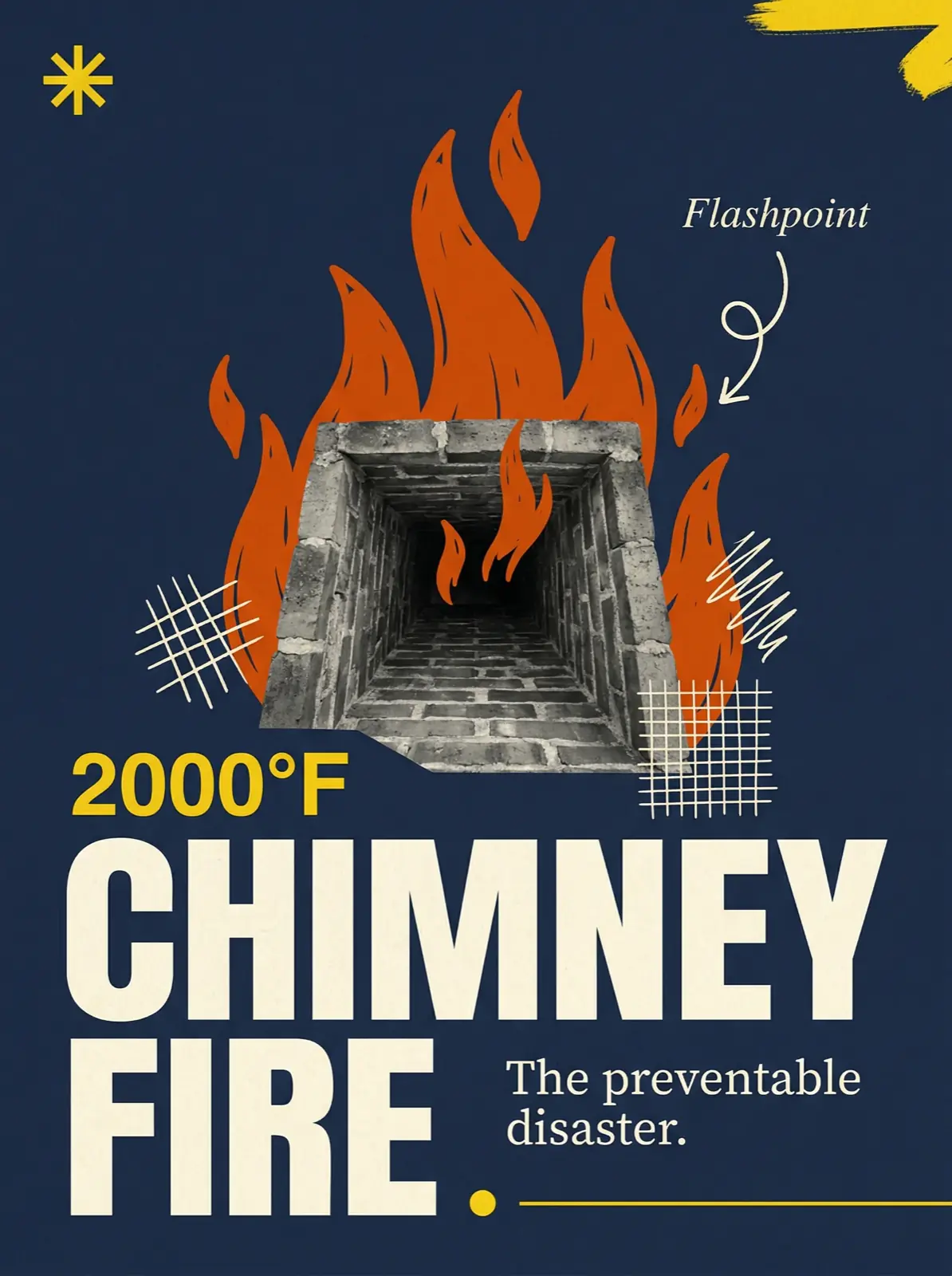
Creosote ignites at about 1,100°F. That's a temperature your average wood fire hits without trying. Once the flue catches, flames inside can climb to 2,000°F, cracking liners and spreading into the framing of the house.
Carbon Monoxide Backup
A blocked flue pushes combustion gases back into your living room, and that includes deadly carbon monoxide. CO is odorless and colorless, and it's the leading cause of accidental poisoning deaths in the U.S.
Masonry & Liner Damage
Creosote is acidic. Left alone, it eats into mortar joints, corrodes metal liners, and accelerates freeze-thaw damage during Oregon winters. A repair bill that should have been a cleaning bill.
Animal Nests & Blockages
We pull squirrels, raccoons, and bird nests out of uncapped flues constantly in the Portland metro. Blocked flues smoke back into the home and become a fire hazard on the first fall burn.
Is Your Chimney Trying to Tell You Something?
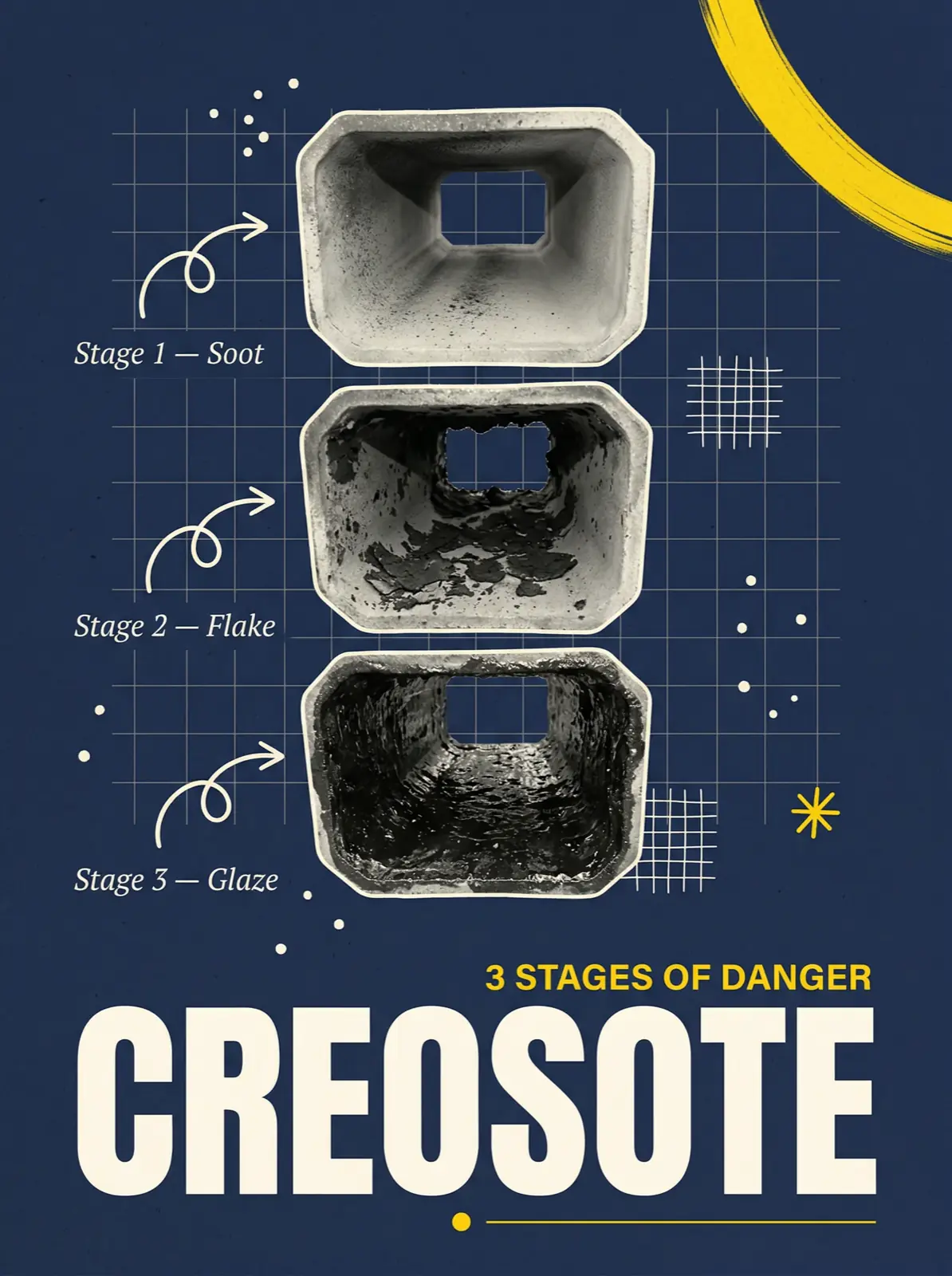
Call a chimney sweep as soon as you notice any of these. Stage 1 is an early sign and gets taken care of with a simple chimney cleaning. However, Stage 3 is very dangerous and expensive to remove. Annual chimney cleanings will prevent expensive repairs and keep you and your family safe.
- Smoke pushes back into the room when you light a fire
- A strong tar, barbecue, or "campfire" smell lingers around the fireplace when it's cold
- Black, crumbly flakes fall onto the firebox floor or hearth
- Fires are harder to start and struggle to stay lit
- Visible soot or staining on walls, ceilings, or the chimney exterior
- You hear scratching, chirping, or rustling from inside the flue
- It has been more than 12 months since your last professional sweep
- You recently bought the home and don't know the service history
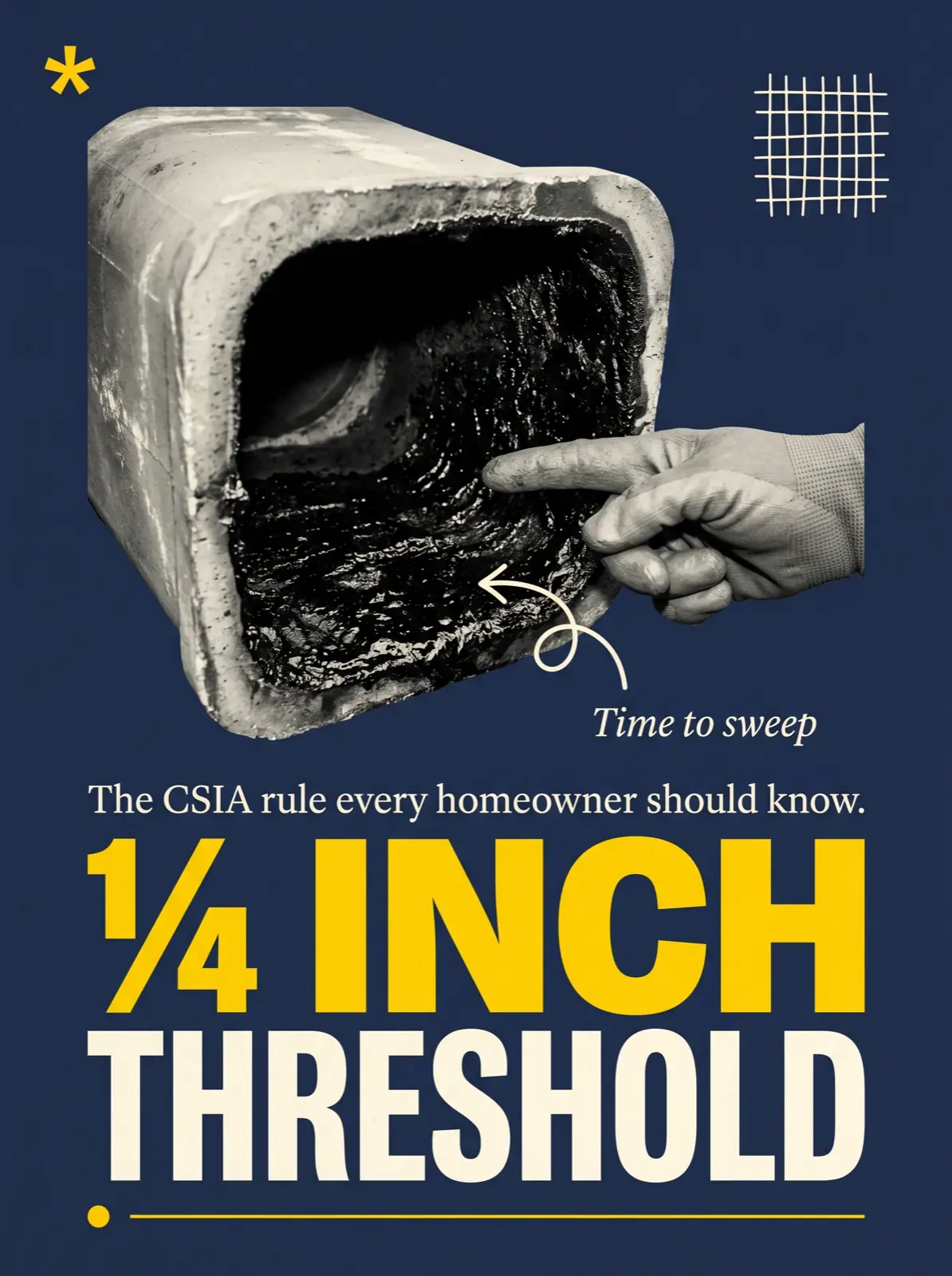
The ¼-Inch Rule and Why It Matters
Creosote forms when wood smoke cools inside the flue. It moves through three stages. Stage 1 is a light dusty soot. Stage 2 is a crunchy black flake. Stage 3 is the glossy, tar-like glaze you really don't want. The further along it gets, the harder it is to remove and the more flammable it becomes.
The Chimney Safety Institute of America has a quarter-inch rule for exactly this reason. If creosote buildup hits a quarter of an inch anywhere inside the flue, the chimney needs a sweep. That's the point where the risk of ignition and flue damage climbs sharply.
On every sweep we measure the buildup, document the stage with photos, and give you an honest read on how often your chimney needs service going forward.
Six Steps. Start to Finish.
Every job follows the same process so you know exactly what to expect, and so nothing important slips through the cracks.
Schedule
Call or book online. Most Portland-metro appointments are scheduled within the same week.
Protect
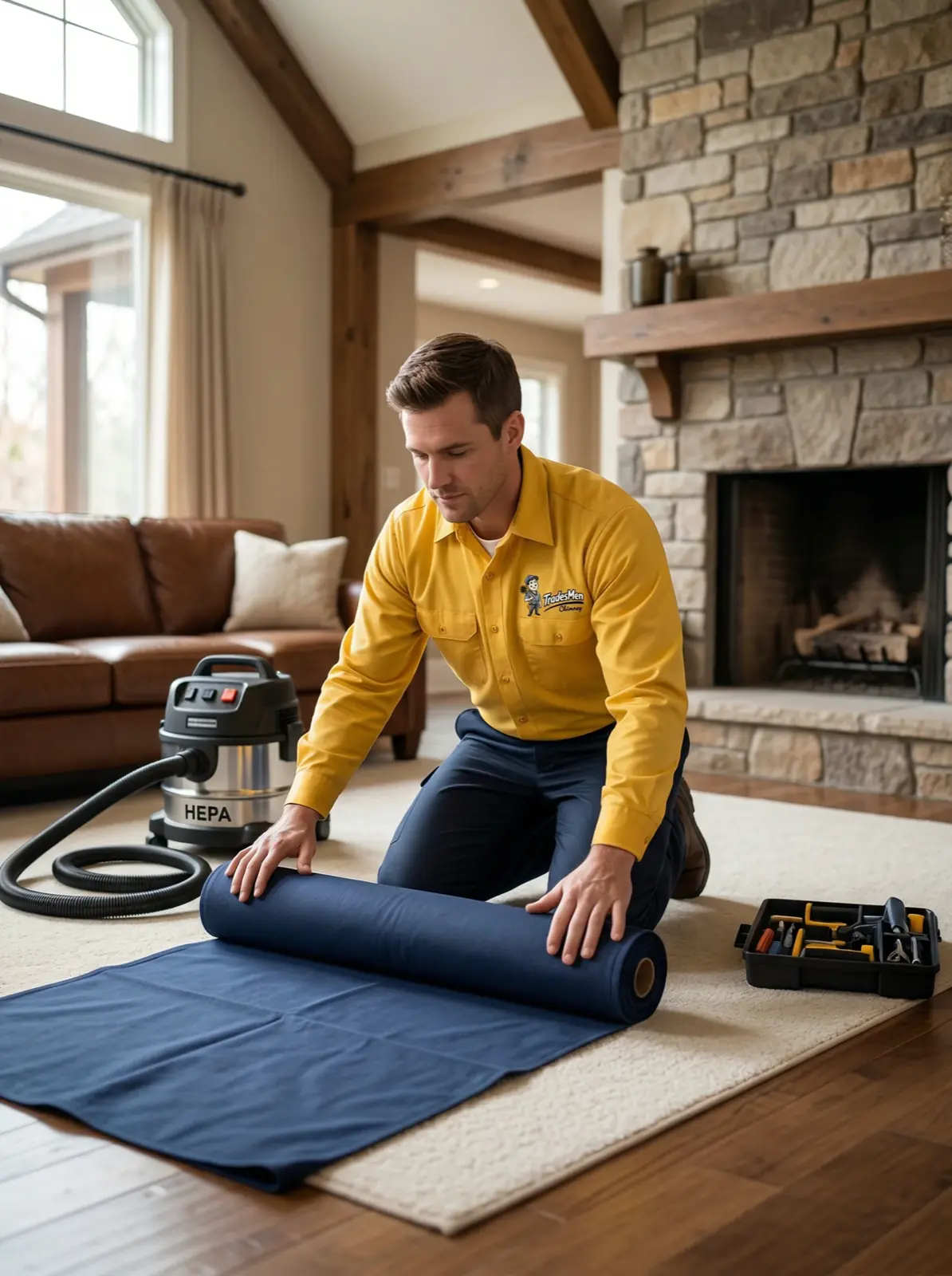
We lay drop cloths, position a HEPA vacuum at the firebox, and seal the work area before anything else.
Sweep
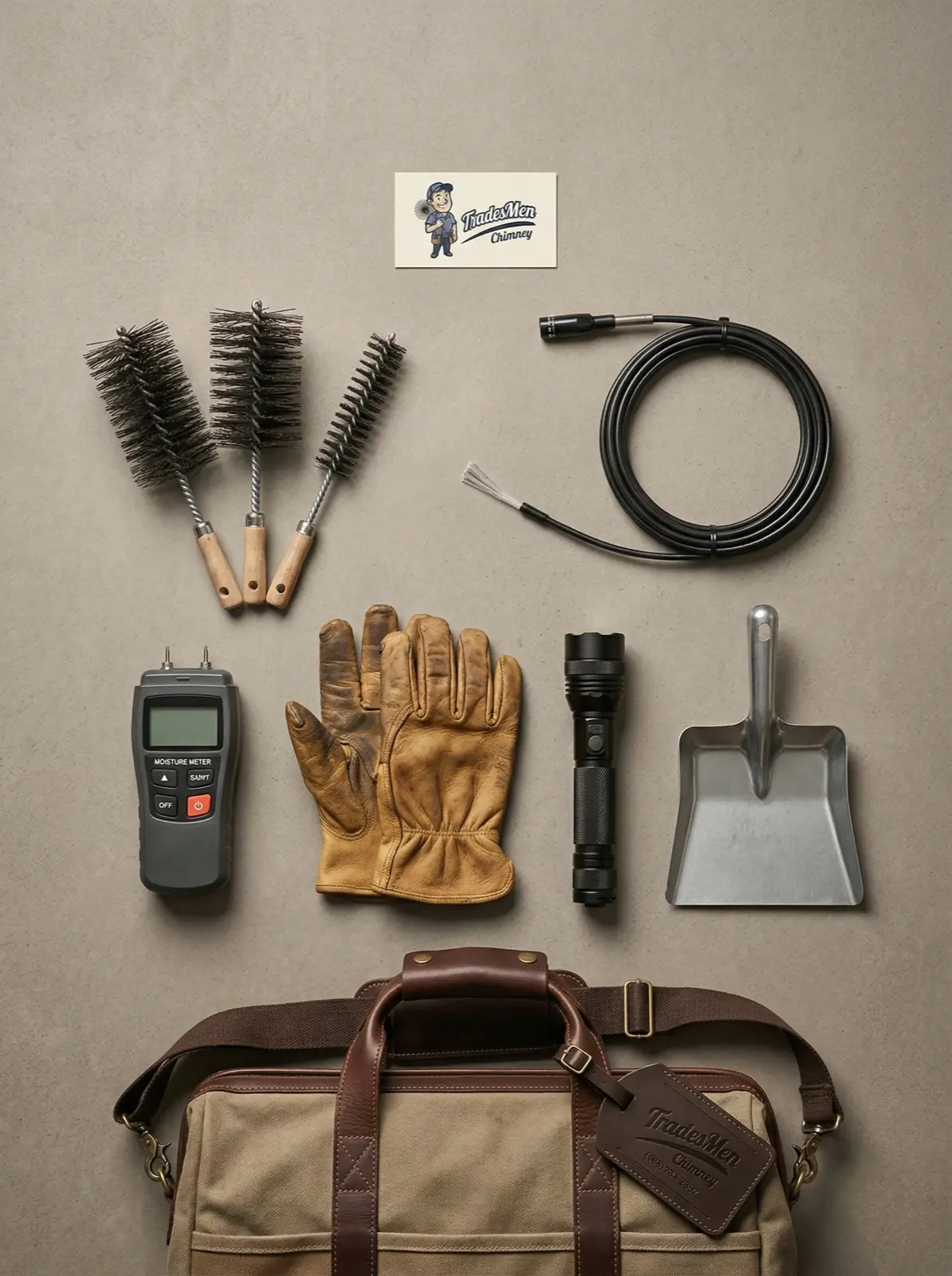
Rotary power brushes sized to your flue clear soot and creosote from the full length of the chimney.
Vacuum
Continuous HEPA containment keeps fine soot out of your living room. No dust on your rugs, curtains, or furniture when we leave.
Inspect
A CSIA Level 1 inspection checks the firebox, damper, smoke chamber, liner, and crown. Level 2 with camera available.
Report
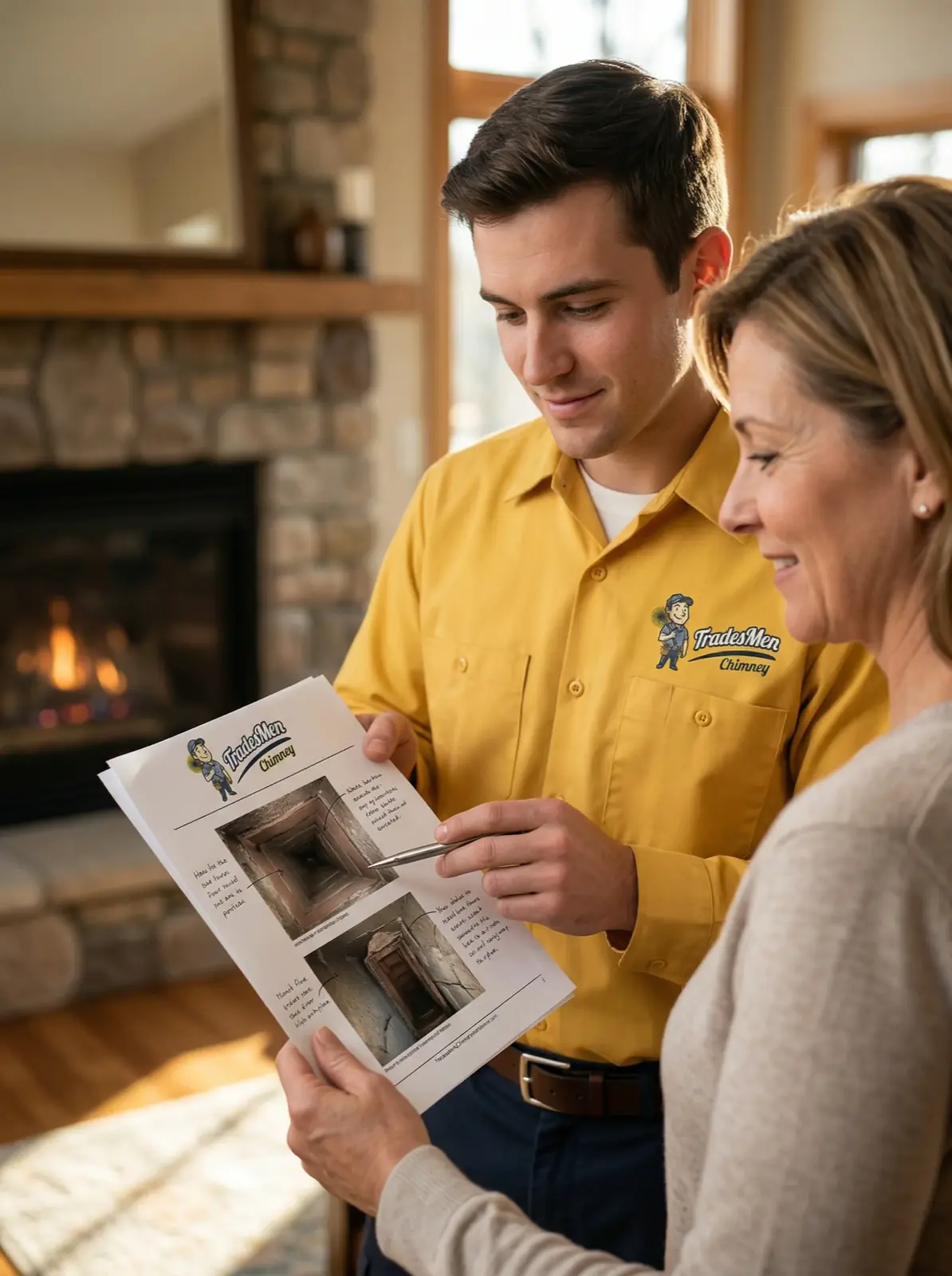
You get a written report with annotated photos and a plain list of anything we found. No scare tactics. No upsells.
Why Portland Metro Homeowners Choose Us
There are other sweeps in the Portland metro. Here's why our reviews read the way they do.
Certified Technicians
Every tech who walks into your home carries active certification from the Chimney Safety Institute of America. Not a weekend hire, not a subcontractor.
HEPA Containment
Professional-grade HEPA vacuums run the entire time we're working. Soot stays inside the vacuum, not on your rugs or your lungs.
Written Reports With Photos
Every inspection ends with an annotated report you can reference later. No verbal estimates scribbled on a napkin.
No-Upsell Promise
If you don't need a repair, we don't sell you one. Our reviews are built on this. Ask any neighbor across the Portland metro who's had us out twice.
Family-Owned Since 2010
15+ years sweeping chimneys across the Portland metro. We live here, our kids go to school here, and we plan to be your sweep for decades.
Same-Week Scheduling
We staff for the Oregon burn season so you're not waiting a month during the first cold snap. Emergency? Call and we'll find a slot.

Know Exactly What You're Paying For
Not every chimney inspection is the same. The CSIA defines three formal levels. Here's what each one actually means and when you should ask for it.
Standard Annual Inspection
Visual inspection of all readily accessible portions of the chimney exterior, interior, and connections. Included with every routine sweep.
When: When nothing has changed and you use the system normally.
Video Scan Inspection
Everything in Level 1 plus a camera-assisted scan of the full flue interior, accessible attic and crawlspace review, and documentation of joints and liner condition.
When: Real estate transactions, after a chimney fire or earthquake, or any time the system has changed.
Invasive Inspection
Includes everything in Level 2 plus removal of components like drywall, chase covers, or masonry to access hidden areas when damage is suspected.
When: Used rarely, only when a serious hazard has been identified and cannot be verified otherwise.
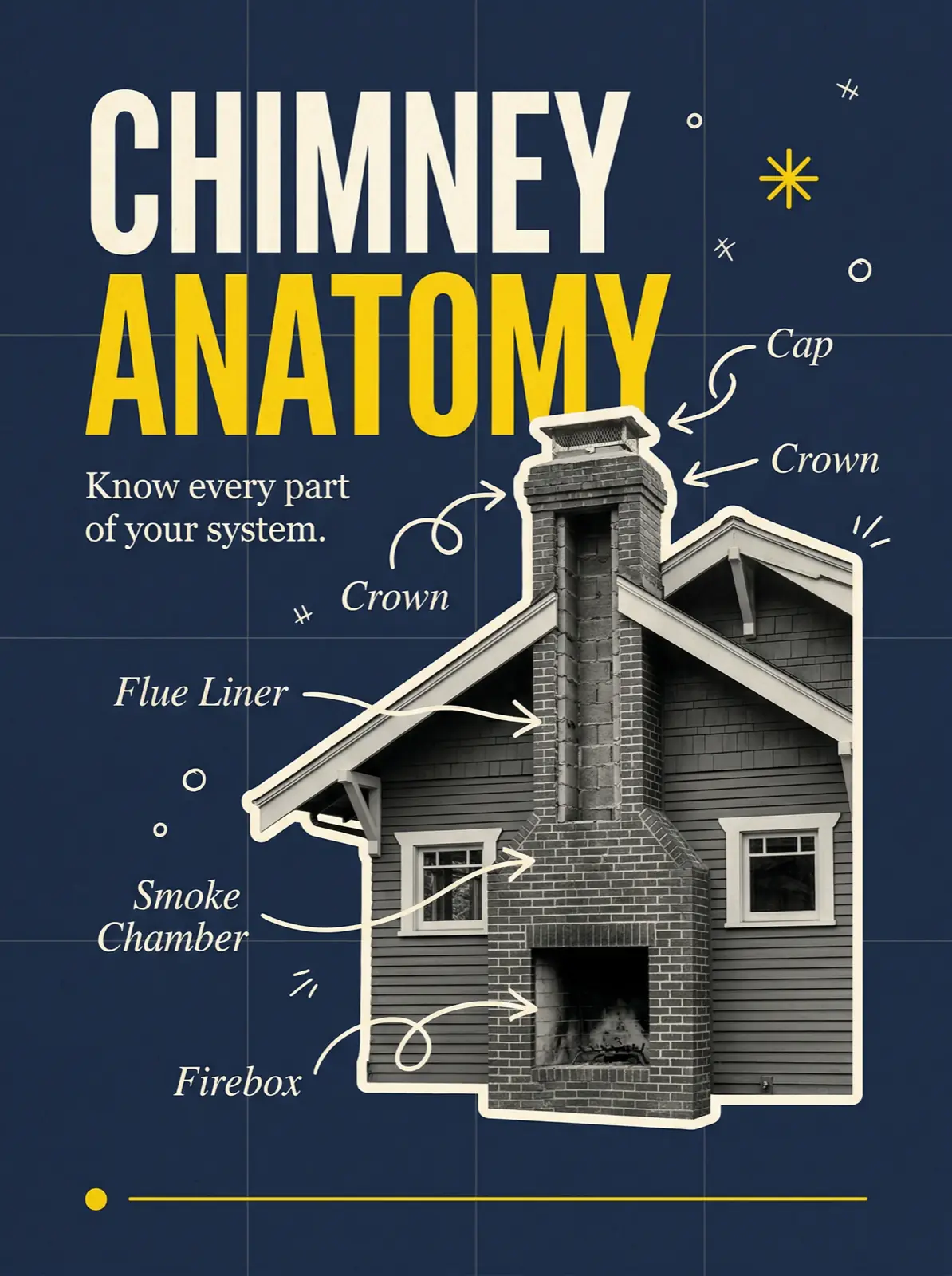
Anatomy of a Modern Chimney System
Understanding the parts helps you understand the report. During every inspection we walk you through these components and explain what we found where.
- Chimney Cap
- Required to code to prevent embers from landing on the roof, keeping out rain and animals.
- Crown
- Concrete or mortar cap sloping water away from the flue tiles below.
- Flue Liner
- Clay, metal, or cast-in-place lining that safely channels combustion gases.
- Smoke Chamber
- Funnel-shaped transition between firebox and flue. Parging here is critical for draft.
- Damper
- Metal flap that opens and closes the flue, either at the throat or up at the top.
- Firebox
- The brick cavity where the fire burns. Built to withstand direct flame.
Burn Dry. Sweep Less.
The single biggest factor in how fast creosote builds up is what you burn. Wet or green wood releases up to 50% more creosote than properly seasoned wood because so much of the fire's energy is wasted boiling off moisture instead of combusting cleanly.
Look for wood with visible end-grain cracks, a hollow sound when two pieces are struck, and a moisture content under 20%. Hardwoods like oak, madrone, and maple burn longer and cleaner than softwoods like Douglas fir or pine.
- Season firewood 12–24 months in a covered, ventilated stack
- Split logs under 6 inches across so they dry thoroughly
- Never burn pressure-treated wood, pallets, or painted lumber
- A moisture meter is one of the cheapest upgrades a wood burner can make
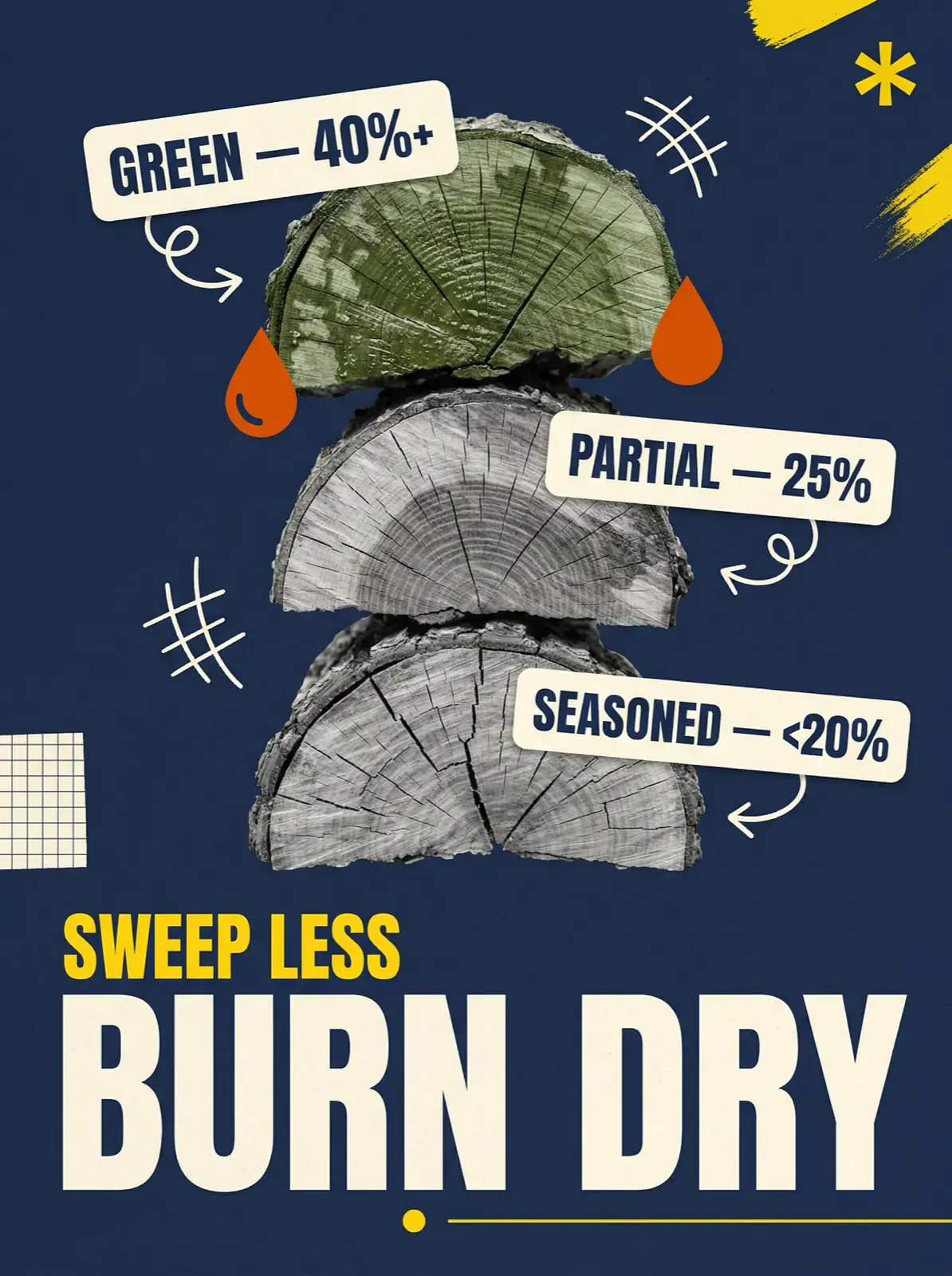
Know What's Ready to Burn
Fully seasoned wood sits below 20% moisture. Partially seasoned runs somewhere between 25 and 35%. Green wood can push 40% and up, and it produces roughly 50% more creosote per burn. A twenty-dollar moisture meter pays for itself in saved sweep visits within one season.
Oak, madrone, and maple are the cleanest-burning hardwoods in the Pacific Northwest. Douglas fir and pine burn hot but leave creosote behind faster, so if softwood is all you have around, plan on sweeping a little more often than the chart suggests.
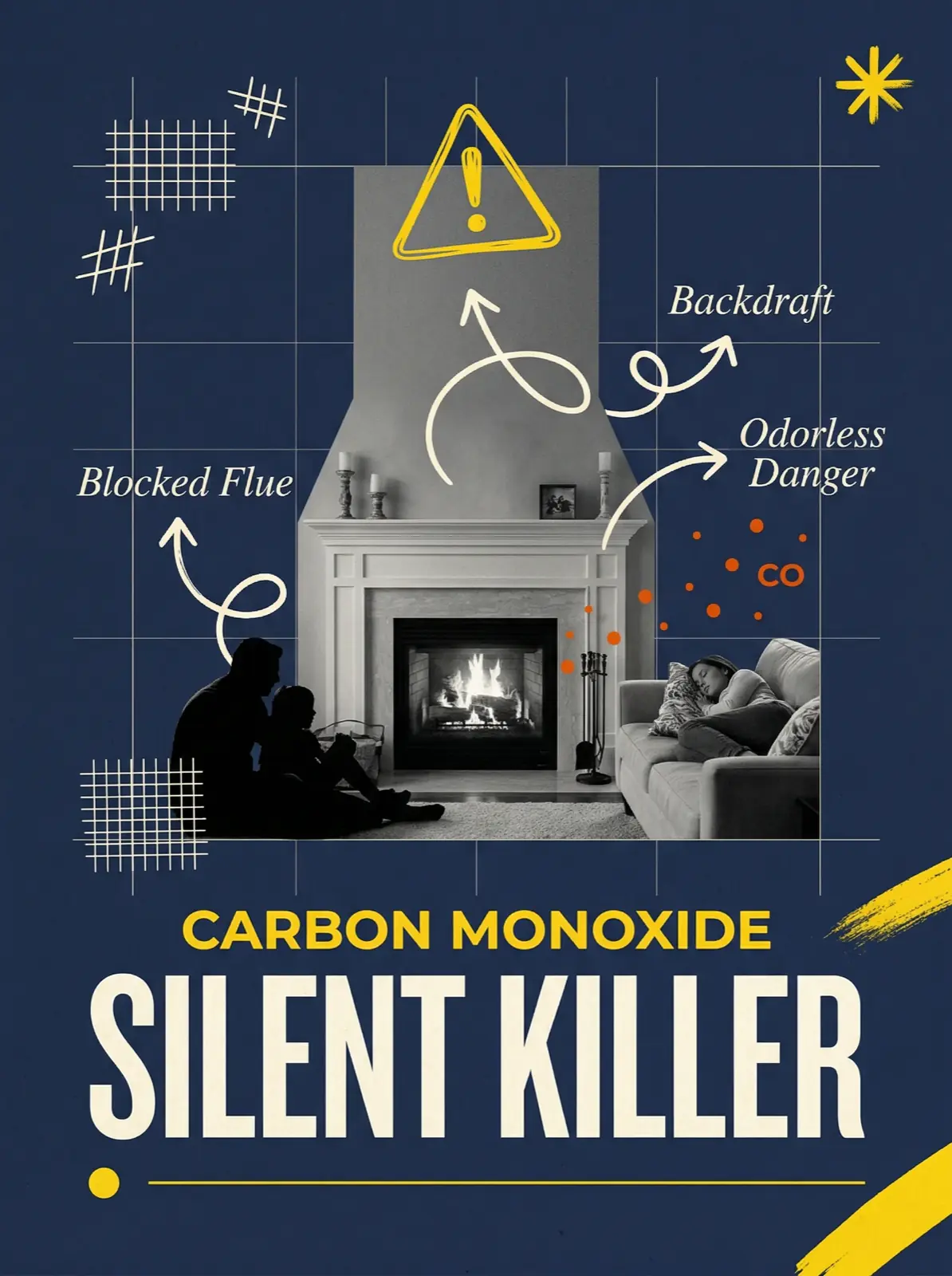
The Silent Reason to Sweep Every Year
A clean chimney doesn't only prevent fires. It also prevents carbon monoxide poisoning. When creosote, a nest, or debris partially blocks a flue, combustion gases can backdraft into your home instead of escaping up and out. CO is odorless, and you won't see it coming.
Every home with a fuel-burning appliance should have working CO alarms on every level and outside any sleeping area. We flag CO risks on every inspection and will tell you straight up if your flue needs immediate attention.
- Install CO alarms on every level of the home
- Test alarms monthly; replace batteries yearly
- Never operate a fireplace with a damaged or uncapped flue
- Get an annual sweep and Level 1 inspection before burn season
What Affects the Price of a Sweep
We quote every job straight over the phone once we know a few basics. Here's what moves the number up or down. No hidden fees, ever.
- Chimney height and how many stories the home has
- How long it has been since the last professional cleaning
- Creosote stage (light dusting vs. glazed tar)
- Whether a Level 2 video-scan inspection is requested or required
- Roof pitch and access conditions (very steep roofs require additional safety gear)
- Number of flues being serviced (some homes have two or three)
We offer upfront pricing, never charge trip fees inside our service area, and honor our written quotes.
Serving the Greater Portland Metro
We sweep chimneys throughout Washington County and the south Portland metro. If your town isn't listed below, give us a call anyway. We probably still cover you.
More Chimney Care from TradesMen
A sweep is often just the start. Our licensed crew also handles chimney repair and tuckpointing across Portland, stainless chimney cap installation in Oregon, and wood and gas fireplace installation in Portland. Our sweep standards follow guidance from the Chimney Safety Institute of America (CSIA) and the National Fire Protection Association (NFPA).
Questions, Answered.
Don’t see your question here? Our team is happy to talk through your chimney concerns at no charge.
Ask a QuestionHow often should I have my chimney swept in Oregon?
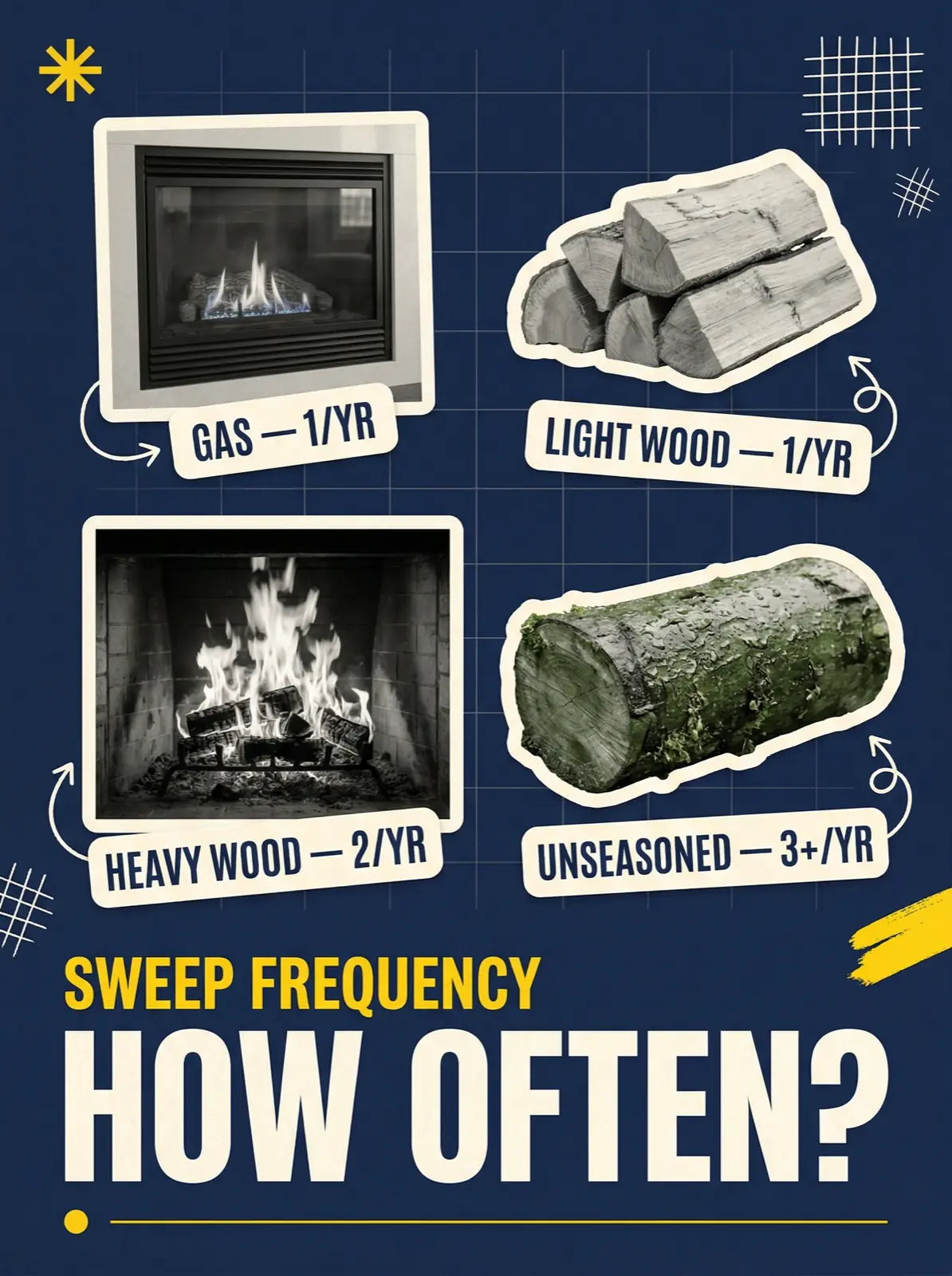
The CSIA and NFPA recommend at least one professional sweep and inspection per year for any chimney that sees regular use. In the Portland area, where many homeowners burn softwood or unseasoned wood during wet winters, twice a year is common for heavy burners.
What is the CSIA ¼-inch rule?
The ¼-inch rule is the professional standard for when a chimney needs cleaning. If creosote buildup reaches a quarter of an inch anywhere inside the flue, the CSIA says it's time for a sweep. Beyond that point, the risk of a chimney fire climbs quickly.
What's the difference between a Level 1 and Level 2 inspection?
A Level 1 inspection is the standard visual check included with every annual sweep. We look at all readily accessible parts of the chimney. A Level 2 adds a camera scan of the flue interior and a review of accessible attics and crawlspaces. It's required for real estate transactions or after major events like a chimney fire.
How long does a chimney sweep appointment take?
A routine sweep with a Level 1 inspection usually runs 45 to 90 minutes. Heavier buildup, multiple flues, or a Level 2 video inspection will take longer. We'll give you an accurate window when you book.
Is a chimney sweep a messy job?
Not when it's done right. We use drop cloths, HEPA vacuum containment, and sealed collection bags the entire time we're on site. You will not see soot on your floors, furniture, or walls when we leave.
Can I sweep my chimney myself?
Homeowners can brush a chimney with a DIY kit, but without a professional inspection you won't know if there's liner damage, a hidden blockage, or a CO hazard. A DIY sweep also skips the written report you need for insurance and real estate purposes.
Do you service gas and pellet appliances, or just wood fireplaces?
We inspect and service all three. Gas and pellet systems still need annual inspections even though they produce almost no creosote. We check venting, clearances, and fuel connections on every visit.
What happens if you find damage during the inspection?
You get a written report with photos, a plain-English explanation of what we found, and a written estimate if repairs are needed. You're never pressured to book anything on the spot. Our no-upsell promise is why we get referrals.
Do I need to be home for a chimney sweep?
An adult should be present so we can walk you through the inspection findings at the end. If that's not possible, we can send the report digitally and call you to review it.
What towns in the Portland metro do you serve?
We cover the greater Portland metro including Beaverton, Tualatin, Lake Oswego, Sherwood, Tigard, King City, Wilsonville, West Linn, Hillsboro, Portland, Aloha, Durham, Salem, and most of Washington County. If you're in doubt, call us and we'll confirm.
Trusted by Hundreds of Portland Metro Families
“Showed up on time, walked me through every step, and left the hearth cleaner than they found it. We finally feel safe lighting our fireplace again.”
“Quoted us for a new chimney cap and a crown repair. Fair price, beautiful work, and a written report with photos. Best contractor experience we’ve had.”
“TradesMen installed our gas insert and made what felt like a huge project completely painless. Everyone on the crew was friendly and professional.”
Schedule Your Chimney Service Today.
Same-week appointments across the Portland metro. You'll talk to a real, certified technician. Never a call center.